

Top Reasons Families Are Investing in Central Mumbai Real Estate
By Sheth Realty , July 29, 2026
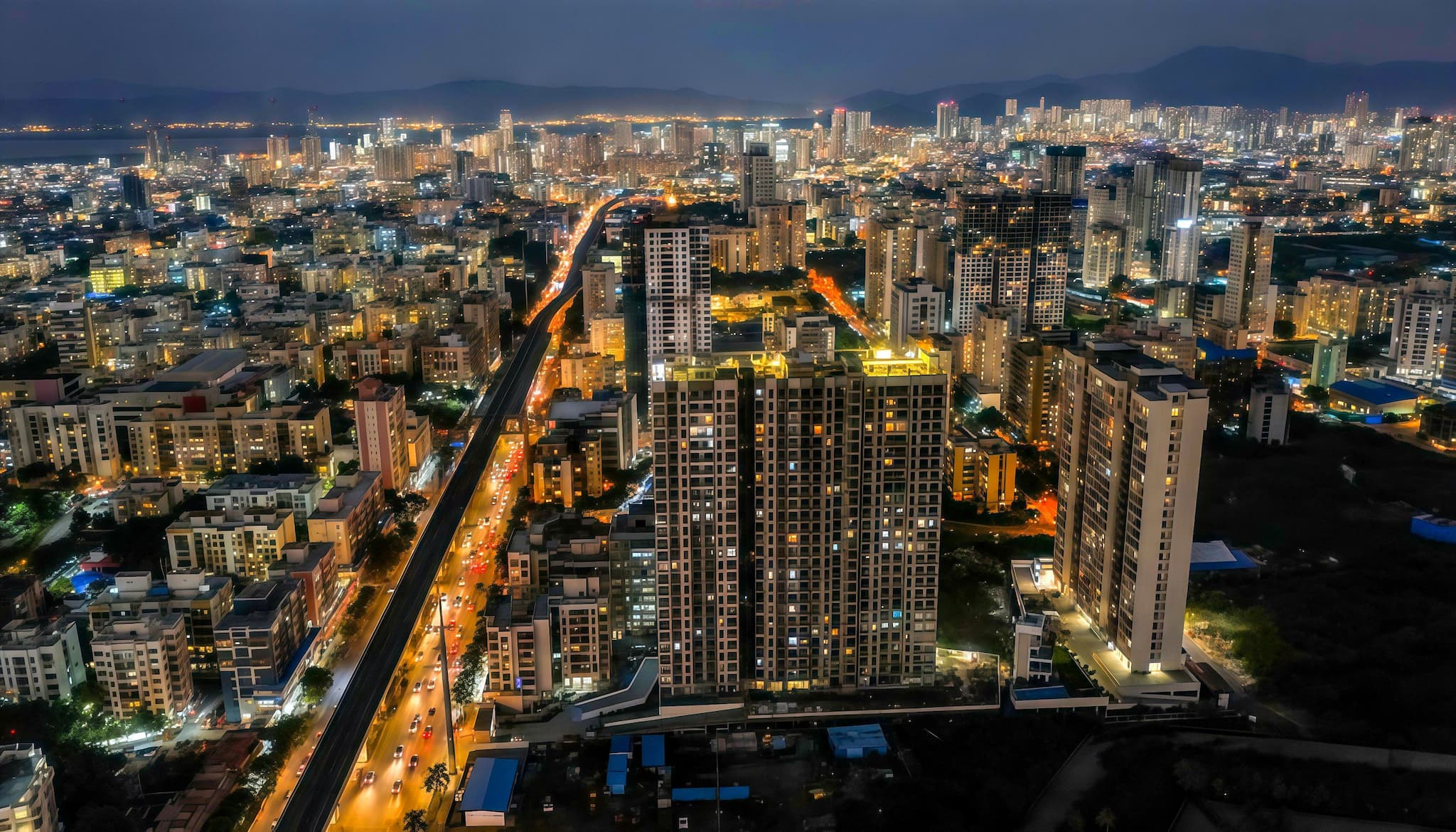
Families are choosing central Mumbai because it is the only part of the city where a home can sit minutes from BKC's offices, alongside some of Mumbai's oldest schools and hospitals, with both the Western and Central rail lines close by without giving up a full-sized family home. Sion sits at the centre of this advantage: with the Sion–BKC Connector in place, India's most prominent commercial district is roughly a four-minute drive away in clear traffic. Add Matunga, Dadar West, Chunabhatti and Chembur around it, and you have a belt that pairs established social infrastructure with a new generation of redeveloped residences which is why demand for spacious 2 and 3 BHK homes here has stayed resilient even as the city expands outward.
Below is a closer look at what is actually driving that decision.
Where Exactly Is "Central Mumbai"?
Central Mumbai broadly covers the belt that sits between the island city's southern tip and the suburbs Dadar, Matunga, Sion, Wadala, Chunabhatti, Chembur, Sewri and the commercial engine of Bandra Kurla Complex (BKC) on its western edge.
Geographically, it is the narrowest and most connected part of the city. Every major road, rail and metro corridor has to pass through it. For a family, that single fact quietly solves a dozen daily problems.
1. One Address That Works for Everyone in the Family
Most families are not optimising for one commute they are optimising for four or five at once. A parent working in BKC, another in Lower Parel, a child in school in Matunga, and grandparents who need a hospital nearby.
Central Mumbai is one of the few micro-markets where all of those can sit inside a manageable radius:
- Rail: Dadar and Sion are the interchange points of the Western, Central and Harbour lines.
- Road: The Eastern Freeway, Sion–Panvel Highway, and the Sion–BKC Connector give direct access south and east.
- Metro: The Aqua Line has significantly reduced east–west travel times towards BKC and the airport belt.
- Airport: Both terminals are typically a 20–35 minute drive outside peak hours.
This is the core reason buyers evaluating 2 BHK flats for sale in Sion or 2 BHK flats for sale in Dadar West consistently rank connectivity above almost every other factor.
2. Schools, Colleges and Hospitals Are Already Here Not "Coming Soon"
In newer growth corridors, families gamble on social infrastructure arriving later. In central Mumbai, it arrived decades ago and matured.
Matunga alone anchors some of Mumbai's most respected educational institutions, and the surrounding belt houses long-established schools, colleges, and multi-speciality hospitals. Families searching for apartments for sale in Matunga or 3 BHK flats for sale in Matunga are often doing so specifically to be inside a school catchment they already trust not to discover a new one.
For a household with children or elderly parents, that certainty is worth a great deal.
3. Redevelopment Has Refreshed an Ageing Housing Stock
For years, the trade-off in central Mumbai was location versus building quality. Much of the stock was 40–60 years old, with small floor plates, no parking and dated services.
Structured redevelopment has changed that equation. New residential towers across Sion, Chunabhatti, Dadar and Chembur now offer:
- Efficient, larger-carpet layouts instead of cramped legacy plans
- Podium and basement parking
- Landscaped decks, clubhouses, gyms and children's play areas
- Modern lifts, firefighting systems, backup power and water management
The result is that buyers looking at 2 and 3 BHK apartments in Sion, 2 BHK flats in Chunabhatti or 2 BHK apartments in Chembur today are getting contemporary specifications in a location that previously offered none of it.
4. Sion: Roughly Four Minutes from BKC, Without Living Inside a Business District
BKC is India's most significant commercial address home to banking, consulting, legal, media and diplomatic offices. But it was designed as a workplace, not a neighbourhood. There is very little genuine family housing inside it, and what exists sits inside a district that empties out after office hours.
Sion solves this precisely. Thanks to the Sion–BKC Connector, a home in Sion places you approximately four minutes from BKC in clear traffic closer, in practical drive time, than many addresses that technically carry a Bandra or Kurla pin code. Yet you live in an established residential neighbourhood with markets, temples, gardens, schools and everyday street life.
That combination is rare, and it is why interest in residential projects in BKC and its immediate fringe Sion, Chunabhatti, Matunga and Wadala has climbed sharply among dual-income households. Families searching for 2 BHK flats for sale in Sion, 3 BHK in Sion or 2 and 3 BHK apartments in Sion are almost always solving for the same thing: BKC access without a BKC commute.
From Sion, the wider map opens up just as easily:
- BKC approximately 4 minutes via the Sion–BKC Connector
- Dadar and Matunga a short drive for schools, colleges and markets
- Eastern Freeway direct access south towards Fort and Nariman Point
- Sion Station Central Line, with Harbour and Western interchanges close by
- Chembur and Chunabhatti minutes away across the eastern side
A shorter commute is not a luxury. Over ten years, it is hundreds of reclaimed hours with your family.
5. Limited Land Supply Supports Long-Term Value
Central Mumbai is landlocked. New supply can only come from redevelopment, and redevelopment is slow, regulated and capital-intensive.
For a family buying a home to hold for 10, 15 or 20 years, that scarcity matters. Constrained supply in a location with permanent demand drivers offices, schools, hospitals, transport interchanges tends to protect value far better than markets where thousands of new units can be added every year.
This is the difference between buying a property and buying a position in the city.
6. Configurations That Match How Families Actually Live
Post-pandemic, family requirements changed permanently. Buyers now ask for:
- A dedicated study or work-from-home corner
- A separate room for ageing parents
- Larger kitchens and utility areas
- Balconies or decks with usable outdoor space
- Cross-ventilation and natural light, not just square footage
New developments have responded. That is why families comparing 3 BHK in Sion, 3 BHK apartments in Chembur or 2 BHK flats in Matunga are increasingly evaluating layout efficiency and deck space, not just the BHK count on the brochure.
7. Community Continuity The Reason Families Rarely Leave
Central Mumbai families often want to stay in the same neighbourhood across generations. The extended family is nearby, the doctor is known, the school has a sibling policy, the community associations are active.
Redeveloped homes let families upgrade their living standard without uprooting their entire support system. It is one of the most underrated reasons behind sustained demand in this belt.
What Families Should Verify Before Buying in Central Mumbai
Use this as a practical checklist during site visits:
Check | Why It Matters |
| MahaRERA registration number | Confirms legal standing, timelines and disclosures |
| Developer's delivery track record | Predicts whether possession dates hold |
| Carpet area vs saleable area | The only fair basis for comparing two homes |
| Parking allotment | Scarce and expensive in central Mumbai |
| Water supply and backup power | Critical in dense micro-markets |
| Deck / balcony usability | Determines real liveability, not brochure value |
| Amenity maintenance plan | Large amenity decks need funded upkeep |
| Approach road width and traffic timing | Visit at 9 AM and 7 PM, not just midday |
Sheth Realty in Central Mumbai
With a legacy spanning over three decades, Sheth Realty has been one of the developers shaping this part of Mumbai building not just towers, but neighbourhoods families settle into for the long term. The approach has stayed consistent: thoughtful architecture, sustainable planning, timely delivery and a design philosophy that puts everyday liveability ahead of ornamental features.
Our flagship development, Sheth Promont in Sion, reflects exactly the logic outlined above. Positioned right beside the Sion–BKC Connector, it places BKC roughly four minutes away while keeping Dadar, Matunga, Chembur, Chunabhatti and the Eastern Freeway all within comfortable reach. The residences themselves are premium 2 and 3 BHK Majestic Deck Residences designed around expansive decks, commanding city views and over 44+ thoughtfully curated amenities.
For a family, that means one address that works for a BKC workday, a Matunga school run and a Dadar weekend, all without changing neighbourhoods.
MahaRERA Registration No. P51800056060 available on the Maharashtra Real Estate Regulatory Authority website under registered projects.
Frequently Asked Questions
Q. Why are families investing in central Mumbai real estate instead of the suburbs? Central Mumbai offers established schools, hospitals and transport interchanges that already exist, plus direct access to BKC and the island city. Families gain shorter commutes and mature social infrastructure rather than waiting years for a new corridor to develop.
Q. How far is Sion from BKC? With the Sion–BKC Connector in place, BKC is approximately a four-minute drive from Sion in clear traffic conditions. This makes Sion one of the most practical residential locations for families with at least one member working in the BKC business district. Actual travel time varies with the time of day and traffic.
Q. Which central Mumbai locations are most popular with families? Sion, Matunga, Dadar West, Chunabhatti and Chembur are consistently preferred because they combine rail and road connectivity with long-established residential communities and strong educational institutions.
Q. Is a 2 BHK or 3 BHK better for a family in central Mumbai? A well-planned 2 BHK works for nuclear families who prioritise location and budget efficiency. A 3 BHK suits households needing a study, a room for parents, or space for children as they grow. Compare usable carpet area and layout efficiency rather than the BHK label alone.
Q. Does central Mumbai hold its value better than newer markets? Land supply here is limited and new homes come mainly through redevelopment. Combined with permanent demand from offices, schools and hospitals, this scarcity has historically supported long-term value, though outcomes depend on the specific project, developer and configuration.
Q. What should I check before booking a home in central Mumbai? Verify the MahaRERA registration, the developer's past delivery record, the carpet area, parking allotment, water and power backup, and visit the site during peak traffic hours to assess real-world access.


MahaRERA Registration NO. P51800056060 & are available on website - Maharashtra Real Estate Regulatory Authority under registered projects


Disclaimer: This creative has been created and issued purely for advertisement and representative purpose only and all images, impression and other details reflected herein are figurative. The developer is not liable or responsible for any information of the project gathered from any unauthorised or unverified website/broker. *T&C apply.
© Copyright 2025 Sheth Realty, All rights reserved
Designed and Developed by Realatte